

Una lámpara de mesa inalámbrica parece una compra simple hasta que empiezas a pensar en dónde realmente quieres usarla.
Tal vez no hay enchufe cerca de la consola de la entrada. Tal vez tu sofá flota en el medio de la sala y no quieres un cable de extensión atravesando el piso. O tal vez quieres una lámpara pequeña en un estante donde el cableado visible arruinaría todo el propósito.
Ahí es donde la iluminación inalámbrica tiene sentido. Pero la conveniencia sola no es suficiente. Una lámpara aún tiene que proporcionar el tipo correcto de luz, ajustarse a la superficie donde se coloca, sentirse estable y verse como si perteneciera a la habitación.
Comienza Con Dónde Realmente la Usarás
Antes de comparar acabados o formas, decide dónde irá la lámpara. Esa única decisión cambia casi todo lo demás.
Generalmente necesita más atmósfera que iluminación de tarea — lo suficiente para suavizar el espacio por la noche, mientras se ve bien como parte del estilo diurno.
El espacio suele ser más reducido, por lo que un tamaño más compacto importa. La lámpara debe agregar un área de luz sin apoderarse del estante.
Lo inalámbrico se vuelve especialmente útil cuando el mueble está alejado de la pared — posiciona el sofá donde funcione mejor la habitación, no cerca de un enchufe.
A menudo funciona mejor como iluminación secundaria que como lámpara principal de escritorio — colócala en una estantería, armario o consola para suavizar la habitación alrededor de tu área de trabajo.
La pregunta no es simplemente «¿Dónde puedo poner una lámpara inalámbrica?» Es: ¿qué necesita esta zona particular de la lámpara? La Lámpara de mesa inalámbrica Marxel Layered tiene sentido aquí — su cristal estratificado y su base distintiva le dan suficiente presencia para funcionar junto a un espejo, una obra de arte, libros o una pequeña bandeja sin necesidad de un cable visible bajando por la pared.

Decide qué tipo de luz necesitas
No todas las lámparas de mesa están diseñadas para hacer el mismo trabajo. Algunas lámparas están diseñadas para ayudarte a leer o trabajar. Otras son mejores creando una capa más suave de luz alrededor de la habitación. Esa distinción es aún más importante con las lámparas inalámbricas.
Si necesitas una lámpara junto a una silla para leer regularmente, presta atención al brillo, la dirección del haz y si la luz alcanza la página cómodamente. Si la lámpara va a ir en una consola de entrada, estantería o aparador, quizás te importe más un resplandor suave y cómo la luz interactúa con la pared, el cristal y los objetos circundantes.
Marxel encaja más naturalmente en esta segunda categoría. Su pantalla estratificada y su forma decorativa la hacen muy adecuada para iluminación ambiental y secundaria — el tipo de luz que hace que una esquina se sienta más completa en lugar de reemplazar la iluminación principal de la habitación.
Eso no hace que un tipo sea mejor que otro. Una lámpara ambiental hermosa puede ser decepcionante si esperabas que funcionara como una luz de lectura dedicada. Una lámpara de tarea fuerte puede parecer innecesariamente brillante si todo lo que querías era un poco de luz nocturna en una consola.

El diseño sigue siendo importante — solo que no por sí solo
Una vez que está claro el papel práctico, entonces mira el diseño. Es aquí donde las lámparas inalámbricas han cambiado mucho.
Muchas aún siguen la fórmula familiar de lámpara portátil: base compacta, tallo delgado, pantalla simple — que funciona bien cuando la portabilidad y la huella pequeña son las prioridades. Pero ahora hay lámparas inalámbricas que se sienten mucho más cerca de las lámparas de mesa decorativas tradicionales.
Marxel
La batería no es lo primero que notas — la base verde oscuro, el tallo de metal, el cristal estratificado. Incluso apagada, sigue contribuyendo algo a la habitación.
Coby
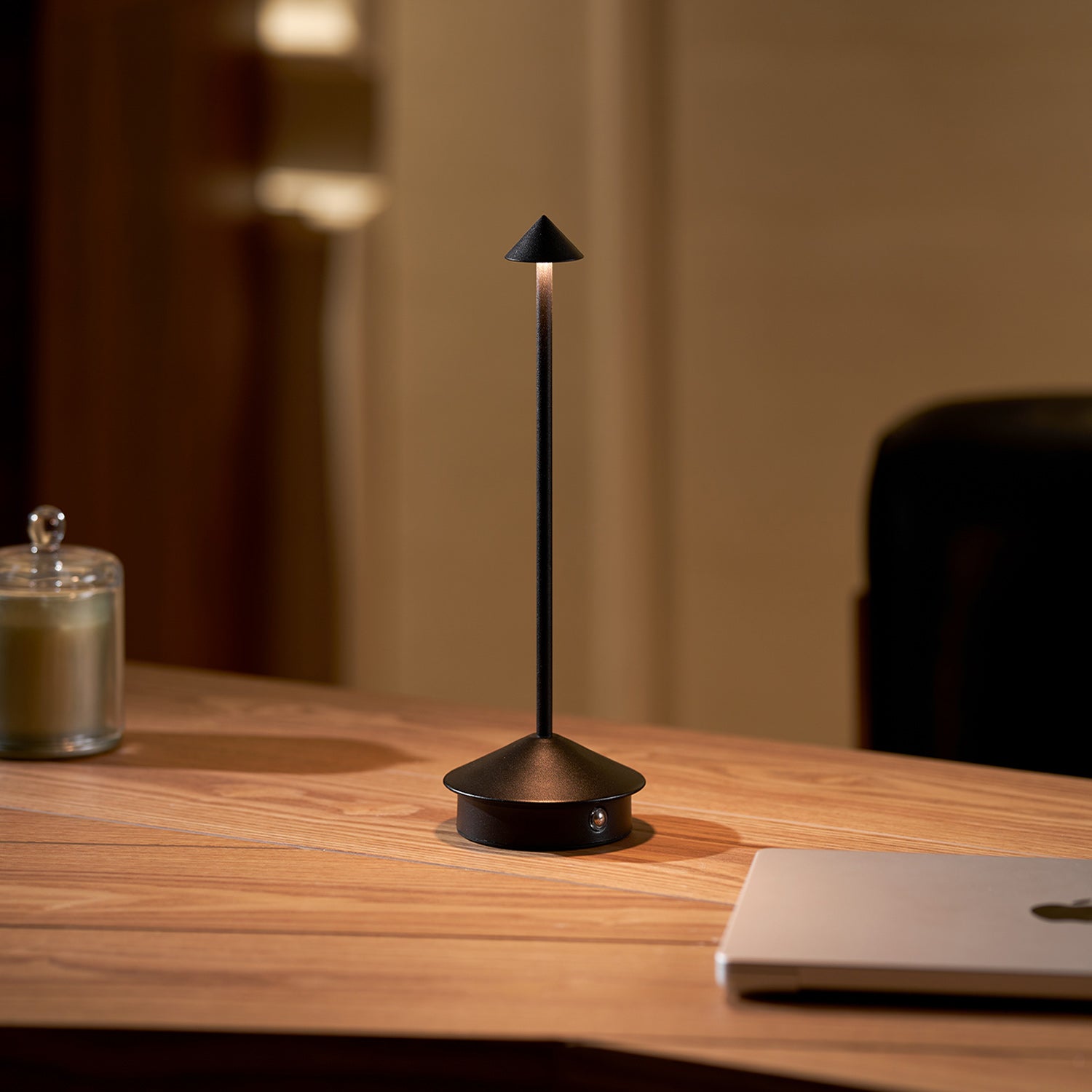
Una forma más compacta con acabado en tono nogal y detalle de color cálido — menos decorativa, lo que la hace más fácil de usar en un espacio más pequeño o una habitación ocupada.
El objetivo no es elegir la lámpara más inusual. Es elegir una que tenga sentido con los muebles que la rodean.

Si la respuesta es sí, entonces la característica inalámbrica está agregando comodidad en lugar de compensar un diseño que de otro modo no elegirías.
La batería y la carga importan más de lo que crees
Esta es la parte que es fácil pasar por alto cuando las fotos del producto se ven bien. Una lámpara inalámbrica debe cargarse, por lo que su configuración de batería afecta qué tan conveniente es realmente en el uso diario. Antes de comprar, verifica la información sobre:

La duración de la batería merece una atención particular. Una lámpara utilizada durante unas pocas horas durante la cena tiene requisitos diferentes a la que planeas encender todas las noches durante períodos largos. El brillo también puede afectar la duración de la batería, por lo que el tiempo de funcionamiento más largo anunciado puede no representar cuánto tiempo dura la lámpara a su configuración de brillo máximo.
Si un producto no proporciona una cifra específica de batería, no asumas que funcionará como otra lámpara recargable simplemente porque las dos se vean similares. La capacidad de la batería, la salida del LED y la configuración de luz pueden cambiar la experiencia en el mundo real.
Los lámparas inalámbricas no deberían eliminar un inconveniente de la habitación — sino reemplazar un cable visible con carga constante.
El tamaño y la estabilidad cambian cómo se siente
Las fotos de productos pueden dificultar juzgar la escala. Una lámpara fotografiada sola sobre un fondo limpio puede verse perfecta, pero al llegar puede resultar demasiado grande para un estante estrecho o demasiado pequeña para una consola ancha. Verifica las dimensiones contra la superficie real donde planeas usarla.

Para un estante de libros, la huella es importante. Para una mesita de noche, piensa en cuánto espacio queda para un teléfono, libro o vaso de agua. Para una consola o aparador más grande, una lámpara portátil pequeña a veces puede parecer desproporcionada aunque técnicamente quepa.
El peso también importa. Una lámpara muy ligera puede ser útil si planeas llevarla de habitación en habitación o al exterior regularmente. Pero en una mesa auxiliar, consola o superficie concurrida, una base más pesada puede hacer que la lámpara se sienta más estable.
Esta es una razón por la que algunas lámparas inalámbricas se sienten más como iluminación permanente del hogar mientras otras se sienten más portátiles. Ninguna es automáticamente mejor — elige según cómo la usarás en realidad.
Las lámparas inalámbricas tienen sentido cuando los muebles vienen primero
Una de las mayores ventajas de la iluminación inalámbrica tiene muy poco que ver con la lámpara en sí. Te da más libertad con la colocación de muebles.

Una mesa auxiliar no tiene que estar contra la pared. Una consola no necesita alinearse con un tomacorriente. Una lámpara puede estar sobre un armario o estante sin que un cable tenga que pasar a través de los muebles.
Un diseño como la lámpara de mesa portátil Multi-lite funciona particularmente bien aquí. Su forma gráfica le da suficiente presencia para una mesa lateral de sala de estar, mientras que el diseño inalámbrico significa que la disposición de los asientos no necesita seguir el diseño eléctrico. Esa flexibilidad es útil en alquileres, casas antiguas, habitaciones de planta abierta y espacios donde agregar nuevas tomas de corriente simplemente no vale la pena.
Pero inalámbrico no es automáticamente la opción correcta en todas partes:
Si tu mesita de noche ya tiene un tomacorriente directamente detrás y usas la lámpara durante horas cada noche, una lámpara enchufable puede ser más simple.
Si necesitas iluminación de tarea fuerte y consistente para un escritorio, una lámpara de tarea enchufable dedicada puede tener más sentido.
Si la lámpara nunca se moverá y el cable puede estar completamente oculto, optar por inalámbrico puede no darte mucho beneficio práctico.
El punto no es eliminar cada cable de la casa. Es usar iluminación inalámbrica donde realmente te da más libertad.
Elige la lámpara que querrás seguir usando
Una lámpara de mesa inalámbrica debe hacer más fácil iluminar un lugar difícil. Pero después de que ese problema se resuelva, aún te queda una lámpara en la habitación cada día — por eso la función y el diseño necesitan trabajar juntos.
Piensa en dónde estará, qué tipo de luz necesitas, con qué frecuencia estás dispuesto a cargarla y si su tamaño tiene sentido para la superficie. Luego elige el diseño. Cuando esas decisiones se alinean, la iluminación inalámbrica deja de sentirse como un parche — simplemente se convierte en otra forma de poner luz exactamente donde la habitación la necesita.
Compra Lámparas de mesa inalámbricas
Sin cables, sin compromisos





Pasa el ratón para pausar · haz clic en cualquier pieza para comprar